

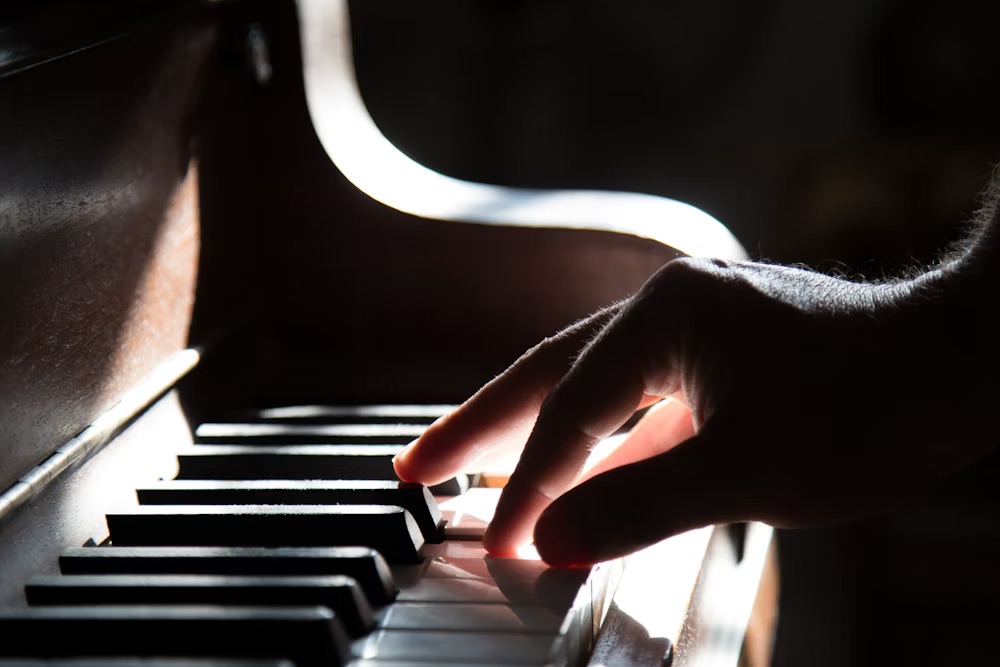
Mastery of an instrument is not merely a technical pursuit; it is a deep psychological, philosophical, and even spiritual journey. Music has long been a means of self-discovery and connection to something greater than oneself, particularly in its origins, where it was played primarily for spiritual or religious purposes rather than personal achievement. However, in Western culture, the pursuit of mastery is often framed as reaching a specific goal—becoming “great” in a way that is measurable or competitive. This idea of greatness, however, is an illusion—a destination we impose upon ourselves rather than an organic part of the artistic process.
True mastery lies not in the pursuit of an end goal but in embracing the journey itself. It is about finding a balance between effort and ease, where playing becomes an expression of presence rather than struggle. Growth comes not through force, but through consistent practice and mindful action. While inspiration may ignite creativity, it is the discipline and focus in our practice that bridges the gap between inspiration and execution. The answers aren’t handed to us—they emerge through the ongoing process of honing our craft with effort, awareness and intention.
Creating a Disciplined Dialogue
In a lesson with Charmaine Ford, I was forced to confront how I spoke to myself about my playing. She introduced the idea of being “disciplined in the dialogue,” highlighting that my internal self-talk was either helping or hindering my progress. When I expressed doubts about my abilities, she reminded me that unchecked, those thoughts could become self-fulfilling prophecies. Instead of thinking, “I’m not as good as them,” she encouraged me to reframe it as, “I’m inspired by them, and I’m on my way to reaching that level.”
She also challenged my long-held belief about detachment in music. I had always tried to think of myself as “no one,” letting the music flow through me. While she saw value in this approach, she pointed out that true artistic expression requires both inspiration and preparation. The gap between inspiration and execution is self-discipline. Without the structure of practice, creativity can remain scattered and inconsistent. She reminded me that composition is “10% inspiration, 90% perspiration”.
When you are ready, you will play without playing.
“Mastery” is a balance between discipline and the ability to let go—an essential paradox in any art form. This idea is deeply rooted in Zen Buddhism, where mastery is not about forceful control, but about cultivating skill and awareness to the point where action becomes effortless. In Zen teachings, this concept is often seen in practices like martial arts, calligraphy, and tea ceremonies, where repeated practice leads to a state where movements flow naturally, without conscious effort. In the same way, mastering an instrument, like the piano, requires the structured repetition of scales, arpeggios, and harmonic exercises—not to create mechanical rigidity, but to free the musician to express spontaneously.
This approach can also be found in sports, where athletes train their bodies so thoroughly that, in high-pressure moments, the right movements emerge instinctively. It’s not about forcing actions but trusting in the preparation that’s been built over time. When applied to music, this concept tells us that technical practice isn’t about rigid control, but about laying the foundation that allows creativity to flow freely. If I approach the piano with tension, self-criticism, or an obsessive need for perfection, my playing suffers. But when I trust my preparation and allow myself to be present, the music can emerge naturally, just like an athlete performing without thinking.
 James Osterlund Music
Leave a comment