

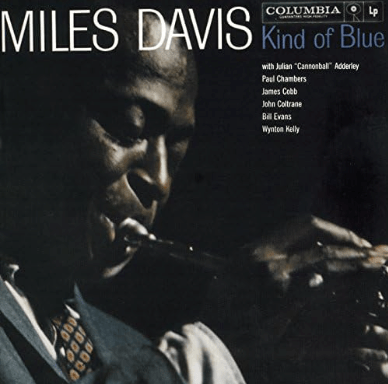
“So What,” a track from Miles Davis’s landmark 1959 album “Kind of Blue,” emerged during a period of intense social and cultural upheaval in the United States. As the Civil Rights Movement gained momentum, jazz became a vital expression of African American identity and resistance. Prior to the modal jazz era, bebop had dominated the jazz scene, especially in New York City, where Black musicians developed a sophisticated style that was notably challenging for white musicians to replicate. By embracing modal jazz, Davis, whose career “spanned over five decades” Rosenthal, S. (2023), played a pivotal role in reshaping jazz. His choice to hire Bill Evans, a white pianist, for “Kind of Blue,” alongside the fact that he “was arrested several times for protesting” Rosenthal, S. (2023), highlights his commitment to challenging societal norms and addressing social issues. Davis’s shift towards modal jazz not only marked a significant change in his own work but also reflected a broader cultural trend towards innovation and experimentation, resonating with the era’s expanding countercultural movements.
In this context of rapid change—from American cars with fins to the dawn of the Space Age—Davis’s “So What” embodies the era’s spirit of unpredictability. The track’s modal approach, with its open-ended structure, mirrors the broader uncertainty of the time. As Kaplan observed, “the essence of modal music, the essence of ‘So What,’ was that you had no idea how it turned out, or if it turned out” Kaplan, J. (2024). This uncertainty was reflective of the world’s shifting dynamics, where “the solos could go anywhere” and “could follow any path” OUPblog (2007). “So What” thus captures the era’s mood of experimentation and transformation, perfectly aligning with the feeling of a world in flux.
In “So What,” the free-time intro features Bill Evans’s piano and Paul Chambers’s bass, creating an introspective atmosphere. This introduction, inspired by Claude Debussy’s impressionistic piano music, uses non-metric rhythms to allow a broad interpretation of time and space. Evans employs parallel triads in second inversion, maintaining the same interval structure while moving up or down the keyboard, which adds to the open and unresolved feel, setting the stage for the modal improvisations.
Following the introduction, “So What” proceeds through its first 32-bar AABA cycle at 138bpm, with the bass, piano, and drums using minimalist rhythms like crotchets, dotted crotchets, semibreves, and 8th notes. The A section starts with an 8th-note bass line, syncopated by a single 8th-note rest, creating rhythmic tension. In the second bar of A1, the bass sustains a note for the entire measure, while the piano and ride cymbal respond, then the bass returns to its repeated 8th-note pattern with a swinging ride cymbal. In the A2 section, horn parts enrich the texture by complementing the piano chords. The cymbal’s intensity builds gradually, and the hi-hat and bass feature combinations of swung 8th notes and quarter notes that subtly outline the structure. Transcription by ‘SoulDrum TaeyongLee’ highlights Jimmy Cobb’s subtle changes to the bass drum and hi-hat patterns leading into the B section, which he maintains throughout the B section to enhance form and interest.

Going into Davis’s solo, the texture of ensemble continues to change as Cobb uses sticks on the ride rather than brushes on the crash. Miles Davis’s solo, especially in bars 2 to 8, showcase his mastery of articulation and rhythmic choices to enhance the swing of the ensemble. As noted, “when he plays two 8th-notes at the end of any phrase, you will notice that the phrase markings are always ‘long’-‘short’ Khan. S (No date).This deliberate use of long-short phrasing at the end of his lines creates a relaxed, swinging feel that propels the music forward and sets the rhythmic tone for the entire ensemble.


Similarly, in bars 32 to 36 of the transcription by ’Santiago Montaña’, Davis employs various techniques, including tying notes across bar lines, to create rhythmic interest. This transcription also highlights Davis’s use of color tones such as G (11), E (9), and C (b7). It’s possible that he approached the melody with a C major triad in mind, despite the underlying chord being D minor. These melodic decisions by Miles affect the texture, as more extensions of the chord are brought out, adding complexity and depth.
In his solo over the A section, Davis primarily uses notes from the D Dorian mode, with the only “non-diatonic” notes being Db/C# and Ab. These non-diatonic notes are mostly used to approach the fifth (Ab→A) or as a leading tone to the tonic (C#→D). Similarly, Coltrane’s solo approach introduces more chromaticism and modal mixture, especially in the B sections, showcasing his bebop influences and complex harmonic explorations. In the B section, Coltrane seems to favour the notes Ab and Eb, while Davis leans towards Db and Ab as his most frequent pitches. These differing note preferences suggest that each musician was thinking in different parent modes, allowing for more creative decision-making. This shifts the focus away from considering Eb as the tonic when soloing, with Coltrane potentially thinking in Ab Mixolydian and Davis in Db Ionian.
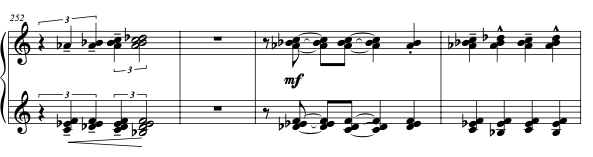
Bill Evans’s solo uses rootless cluster chord voicings that often move in contrary motion to create a thick harmonic texture. Additionally, he enhances the texture of his solo by playing two notes at once that are a tone or semitone apart, creating a crunchy-sounding melody. These two techniques not only contribute to a rich harmonic foundation but also create textural contrast within his solo

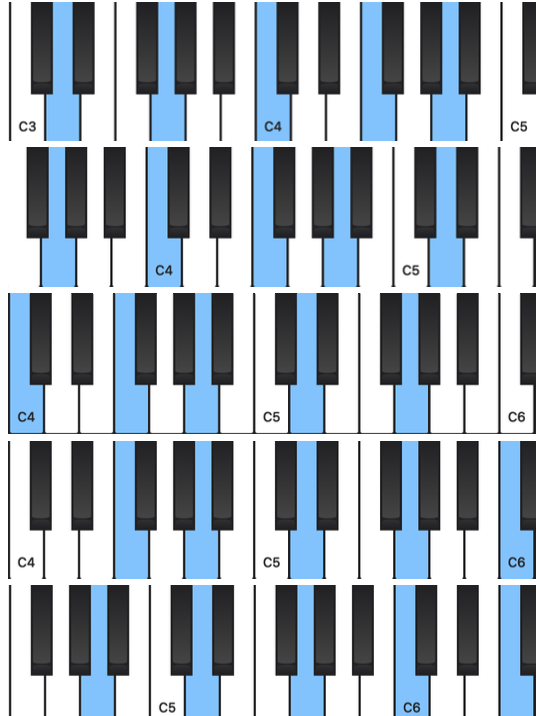
Bill Evans also employs quartal voicings throughout “So What,” which are constructed using notes from the pentatonic scale. These voicings are created by skipping one note of the pentatonic scale between each note of the chord until all the notes of the scale are used. While Evans often uses these quartal voicings in root position, he occasionally plays them in their respective inversions, adding variety and depth to the harmonic texture. This technique not only reinforces the modal character of the piece but also enhances the overall sound by creating a more open, spacious feeling in the harmony.
Rearranging the minimalist tune “So What” into the maximalist style of prog rock was challenging without losing its identity. I increased the tempo from 138bpm to 165bpm and transformed the free-time piano and bass intro into a triumphant, syncopated fanfare with a soaring guitar melody. Horns and strings, using varied voice leading, added textural depth in bars 1 to 4 and 8 to 11. The intro bass line’s rhythm and notes remained mostly unchanged but were metronomically locked in, creating a completely different vibe. In bars 5 to 7, the bass figure is doubled by piano and guitar and layered with a harmony played by strings in pizzicato. Bars 8 to 11 feature a complete tutti section that pays homage to Bill Evans’s use of parallel triads. The free-time feeling of the original “So What” intro is somewhat replicated as this tutti section incorporates a swung 16th note rhythm. Combined with the absence of drums in bars 1 to 11, this gives a sense of a lack of pulse, despite the 4/4 time signature.
After the tutti section, the first A section begins, featuring bass guitar and piano in unison an octave apart. I retained the original bassline notes but completely changed the rhythm. The new syncopated pattern spans three bars of 6/8, stays on the beat for one bar of 5/8 with the piano responding to the bassline, then returns to syncopation with slight rhythmic variation over another three bars of 6/8, and ends with a rest in one bar of 2/4, where the piano again responds to the bassline. This riff repeats until the end of the song. The use of mixed meter in this arrangement, with shifts between 6/8, 5/8, and 2/4, mirrors prog rock’s intricate rhythms and time signature experiments. The intro section, in 4/4 at 165bpm, undergoes a metric modulation when changing to 6/8 at 220bpm, adding complexity and drive.
As the first two A sections develop, instruments are gradually added every 6-bar cycle, with each A section containing four cycles. In the 3rd cycle, an electric guitar with a dotted crotchet delay is introduced, strumming on the first beat of the 6/8 bar to provide rhythmic cohesion. This cycle also adds a syncopated synth. In the 4th cycle, drums enter, with the snare on beat 2 of the 6/8 bars and beat 4 of the 5/8 bar, treating this bar as a grouping of 3 + 2. Additionally, a synth plays mostly on downbeats, and a rhythmically complex syncopated guitar part experiments with groupings of 3 and 2. In terms of melodic devices, bars 103 to 107 feature the clavinet solo’s melody being pre-emptively superimposed a semitone higher, creating anticipation for the upcoming A section. Harmonically, the clavinet solo in bars 96 to 100 features intervals of fourths jumping around and often moving non-diatonically as they chromatically approach their succeeding notes.
Rearranging “So What” from its minimalist roots into a maximalist prog rock style was both challenging and enlightening. Maintaining the song’s identity amidst the stylistic shift was a primary difficulty. The original “So What” is defined by its simplicity, subtlety, and open-ended structure—qualities at odds with the complexity and density of prog rock. Increasing the tempo, transforming the intro, and adding intricate layers of instrumentation risked overshadowing its essence. The challenge was balancing these new elements without making the piece unrecognisable. Each musical decision required consideration as to preserve some spirit of “So What.” This project also highlighted what defines a piece’s identity. It required discerning essential elements of “So What” and knowing which could be modified without losing its core. This understanding is crucial for any musician or arranger, informing how to innovate while respecting the original work. Through this task, I gained a deeper appreciation for maintaining a song’s identity during significant stylistic changes and improved my skills in music rearrangement.
Bibliography:
Kaplan, J. (2024). 3 shades of blue : Miles davis, john coltrane, bill evans & the lost empire of cool. Canongate Books.
Khan. S (No date) Miles Davis so what solo transcription. Available at: http://www.stevekhan.com/sowhata.htm
OUPblog (2007) It’s about that time for Miles Davis’s ‘so what’, OUPblog. Available at: https://blog.oup.com/2007/01/its_about_that_/
Rosenthal, S. (2023) The Life & Tribulations of Miles Davis, Em & Ahr. Available at: https://emandahr.com/blogs/legends/the-life-tribulations-of-miles-davis#:~:text=In%20addition%20to%20his%20musical,platform%20to%20advocate%20for%20equality
Santiago Montaña. (2020) YouTube. Available at: https://youtu.be/xhNM8vNl-Co?si=TJB7YmOjfIfphLWb
SoulDrum TaeyongLee. (2020) YouTube. Available at: https://youtu.be/kZ1Q1LuvnIs?si=-BmrZjmh60Gdy5SJ
 James Osterlund Music